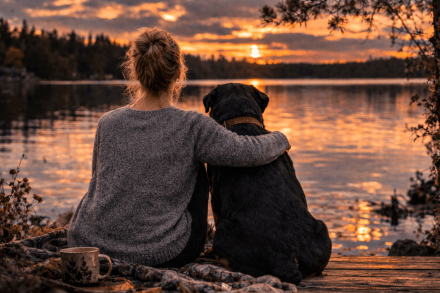
Independence keeps you safe but understanding it might set you free.


Some of the strongest people you know aren’t strong because life was easy. They’re strong because, at some point, they learned they had to be.

Hyper-independence is often mistaken for strength. On the surface it looks attractive and desirable to someone who handles everything themselves, asks for nothing, and keeps moving forward no matter what. But hyper-independence isn’t just independence. It’s a learned way of surviving in a world where, at some point, relying on other people didn’t feel safe.

For many of us, it starts early. A difficult childhood teaches us how much space we’re allowed to take up in the world and whether someone will show up when we need them. I was a latchkey kid, the youngest of four girls. By the time I came along, my parents were, in many ways, already spent. The house wasn’t always peaceful, there was a lot of yelling/screaming, and my father’s extra-curricular activities left cracks in the foundation of our family that a kid can feel even if she doesn’t fully understand them yet. So I did what a lot of kids do in those environments: I learned to take care of myself. I played alone. I figured things out on my own. And like many children growing up in complicated homes, I learned some lessons about trust and safety far earlier than I should have. Maybe that is why people mistake my mistrust for hyper-independence/”being strong.”

When independence becomes the only way you know how to live, it follows you into adulthood. You become capable, resilient, and outwardly strong but relationships can feel complicated. Sometimes we choose solitude not because we truly want to be alone, but because being close to someone requires a level of vulnerability we never learned how to trust. Sometimes we sabotage good things without meaning to, pulling away just when connection begins to feel real. It isn’t because we’re broken. It’s because the part of us that learned to survive alone still thinks it’s protecting us. Is this something that we will ever be able to get over? Will we ever allow ourselves to welcome a new healthy relationship into our lives? 

If you recognize yourself in this, I want you to know something: you are not strange, and you are not alone. Many of us learned early that the safest place to stand was on our own two feet. That instinct kept us going when we needed it most. But it doesn’t mean we were meant to walk through life alone forever. Understanding where hyper-independence comes from is the first step toward loosening its grip toward letting people in, little by little, without feeling like we’re giving up our strength.

And if you’re someone who has built a life around doing everything yourself, who sometimes pushes people away even when your heart wants connection, I see you. Truly. There are more of us out here than you realize.

When Students Slip Through the Cracks


There are many teachings and expectations in education that I struggle to fully wrap my head around. Education is supposed to be a systematic, regulated structure formats, frameworks, and standards we are expected to follow. Yet the reality is, not everything fits neatly into those boxes, and not every student does either.

I am a special education teacher in an alternative education school. Our school serves students from ten surrounding districts within our county. We work with students in grades 7 through 12, and the classified disabilities we support include emotional disturbance, learning disabilities, other health impairments (OHI), Tourette’s syndrome, and others.

Our special education classrooms are structured as 8:1:1, while our general education classes can include up to twelve students. We serve students with high-incidence disabilities in one program and students with low-incidence or more severe disabilities in another, based on instructional and support needs. These decisions are not arbitrary they are intentional, because the needs are real and complex.

Every facet of education matters. Curriculum matters. Standards matter. Data matters. But what matters just as much are the students sitting in those classrooms students who come in carrying trauma, instability, frustration, and often a long history of feeling misunderstood or dismissed.

And this is the part that weighs heavy.

If we, as educators, do not do a thorough job if we allow these students to slip through the cracks of the education system the impact does not end at graduation or aging out. These are the same students who are eventually sent out into the real world without the tools, coping skills, or supports they needed all along. The struggle doesn’t disappear; it just shifts. And when it does, it affects all of society.

Education is not just about passing classes or checking off requirements. For many of these students, school is the last structured support system they will have. It is where they learn how to regulate emotions, resolve conflict, communicate, and survive in a world that often isn’t built for them.

The Quiet Permission to Let Go


If you think about it, winter forces stillness. It’s something we have no control over, it simply is. The snow softens everything around us. It hides the letting go of the temporary, vibrant life we’re given in the spring and throughout the summer. But even this form of life gets tired. It grows weary of the heat, the wind, and the rainstorms.

The same goes for people. We get tired of the challenges life puts us through. The difference is, we can break those cycles. We have the ability to shelter ourselves from what damages us.

Protect yourself, and let go of the things, and the people that do you no justice. When you feel worn down or cornered, remember to protect yourself and your peace.

It’s okay to walk away


We are all entitled to our own opinions and beliefs. I don’t judge, I don’t become angry, I’m not resentful, and I don’t hold anything against anyone because of someone’s own beliefs.

What I will do is walk away. I will walk away from subliminal comments and subtle digs that are thrown at me if I don’t agree with others.

It’s okay to cut ties for your own good.

It’s not for anyone else to make sense of why you do what you do. It only has to make sense to you. Have confidence when stepping away from relationships that make you feel inferior, dismissed, or small, Your peace is worth more than proximity.