Troy’s Waterfront Farmers Market, Troy, NY


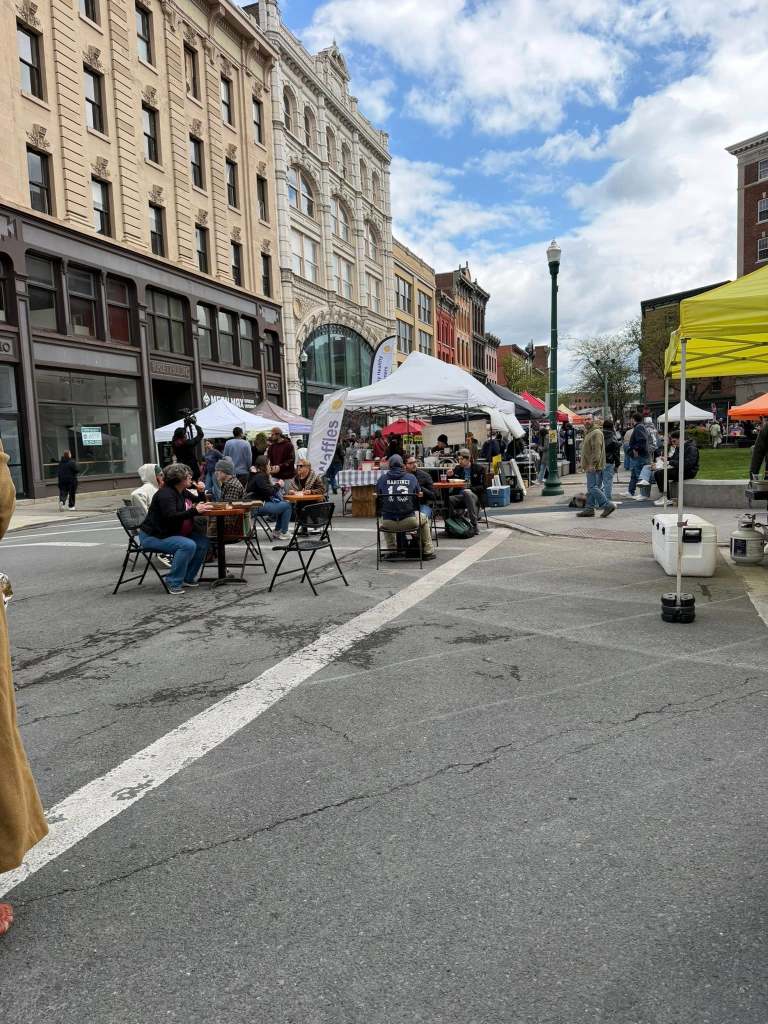
There’s a certain kind of morning you don’t plan too hard you just show up and let it unfold. That’s what the Troy Farmers Market feels like. My girlfriend and I went to the first opening day, which starts in May the first Saturday and then every Saturday there after. We arrived about 9:30. I suggest you get there early because it tends to get a little crowded mid afternoon and you want to get a jump on the good stuff in the morning.

Tents stretch down the street, white canopies lined up against old brick buildings, the kind that have seen a hundred versions of the same Saturday. People move slowly here. Not lazy just unhurried. Coffee in hand, dogs weaving between legs, conversations that don’t feel rushed.

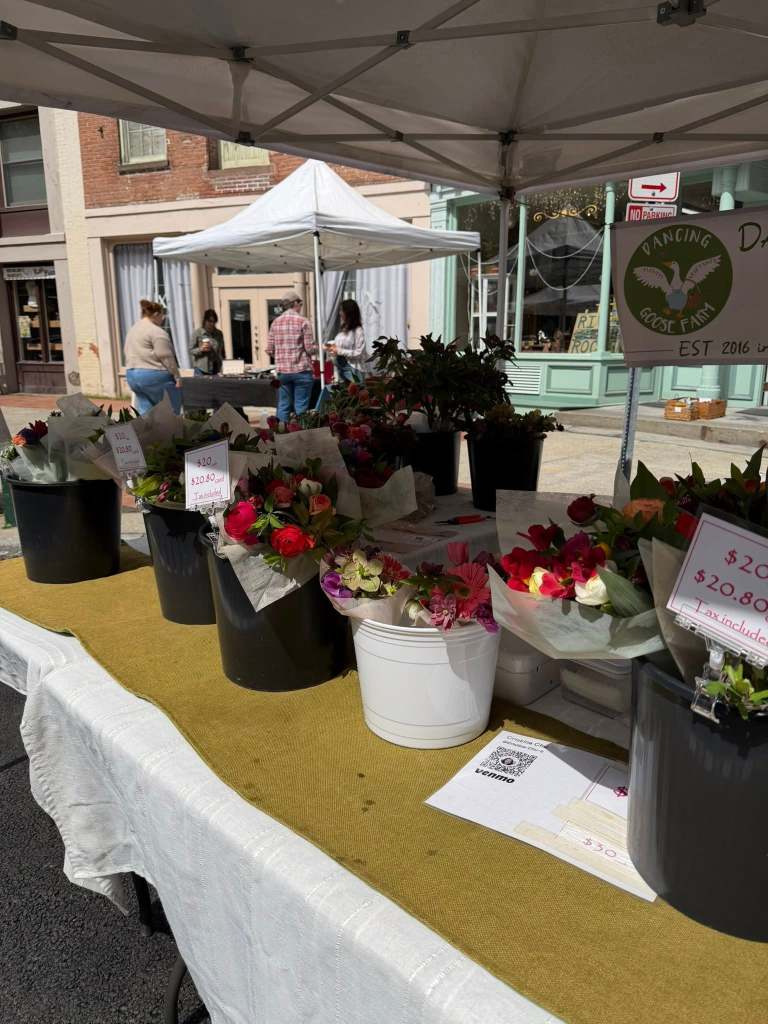
The first thing that pulls you in is the color.

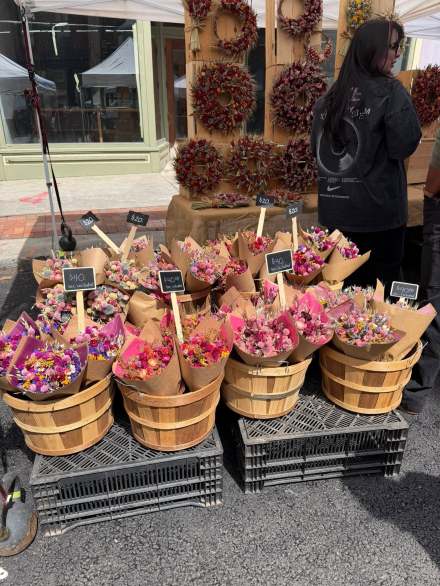
Bouquets stacked in wooden baskets, wrapped in brown paper like small gifts. Deep reds, dusty pinks, wild textures that don’t look overly arranged just gathered. Behind them, wreaths hang in rows, each one slightly different, like someone took the time to make sure no two were exactly alike.

You keep walking, and it shifts from flowers to food without warning.

There’s a table with cheese pull-apart bread from a vendor called Ideals. It’s the kind of thing you don’t overthink you just know it’s coming home with you. Warm, soft, the kind of bread that pulls apart in layers and disappears faster than you expect.

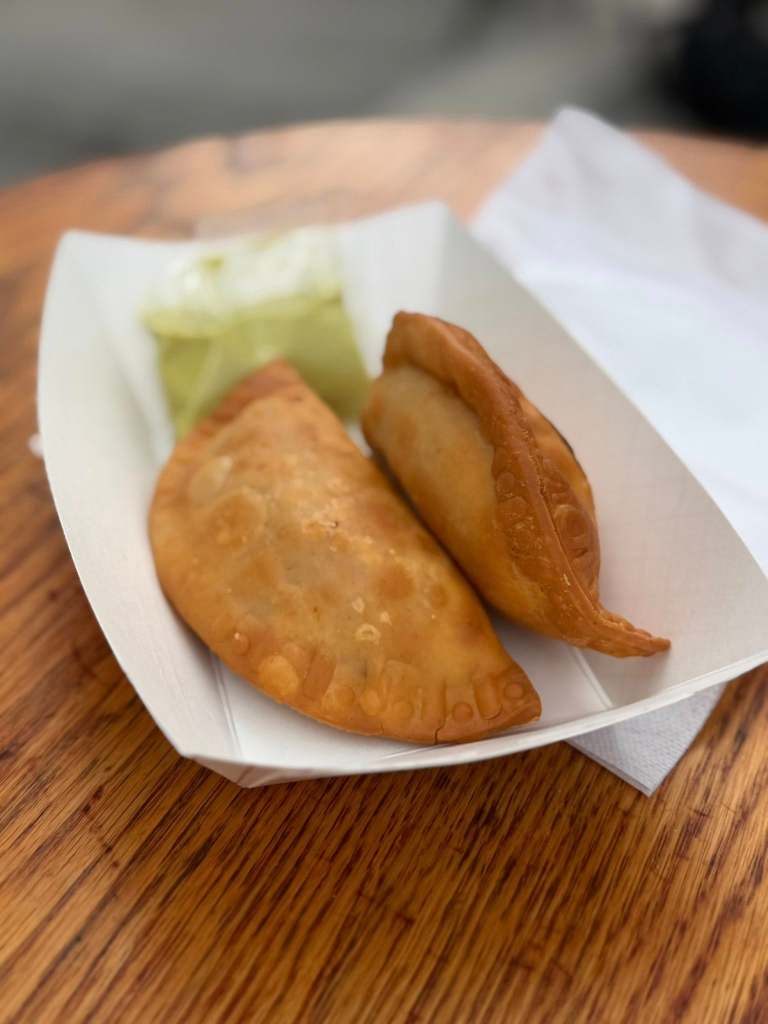
A few tents down, the smell changes again. Something savory, heavier. That’s where Lidia’s Empanadas is set up. You order without much hesitation. They hand it to you hot, and you realize pretty quickly this isn’t a “save it for later” situation. You eat it standing there, half paying attention to the crowd moving around you.

Then there’s the quieter side of the market.

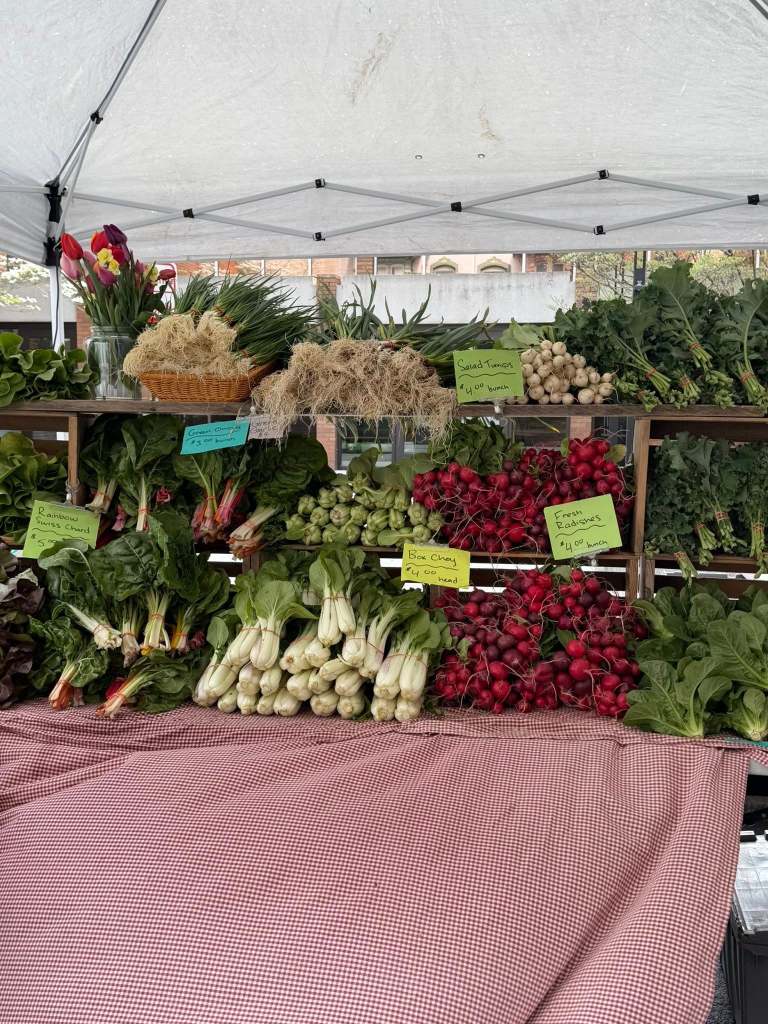
A produce stand stacked with greens bok choy, radishes, bunches of herbs still smelling like the ground they came from. I made roasted garlic and radishes as a side dish and it was delectably wonderful! You pick up basil and cilantro, not because you had a plan for them, but because they looked too fresh to pass up. That’s how a lot of decisions get made here.

Not everything is food.

There’s a small thrift setup tucked between vendors racks of vintage clothes, simple and a little unexpected in the middle of everything else. You flip through without urgency. It’s less about finding something and more about the act of looking.

And then there are moments you almost miss if you’re not paying attention.

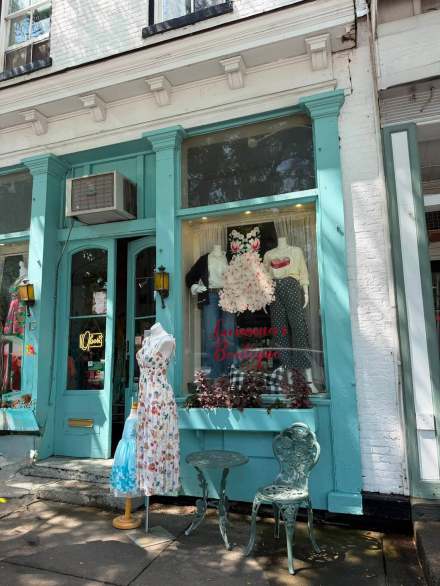
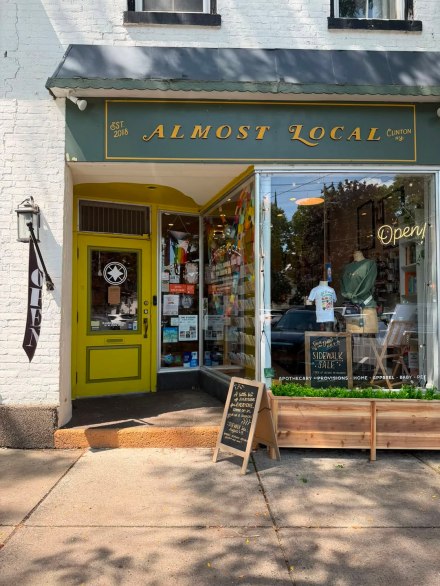
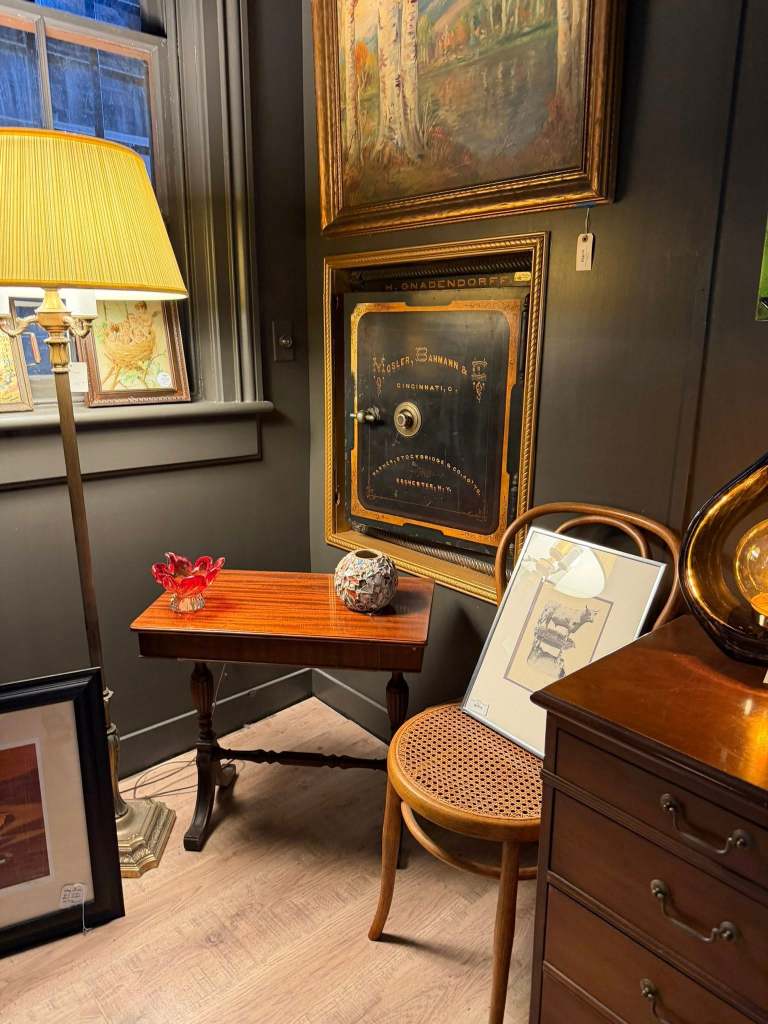
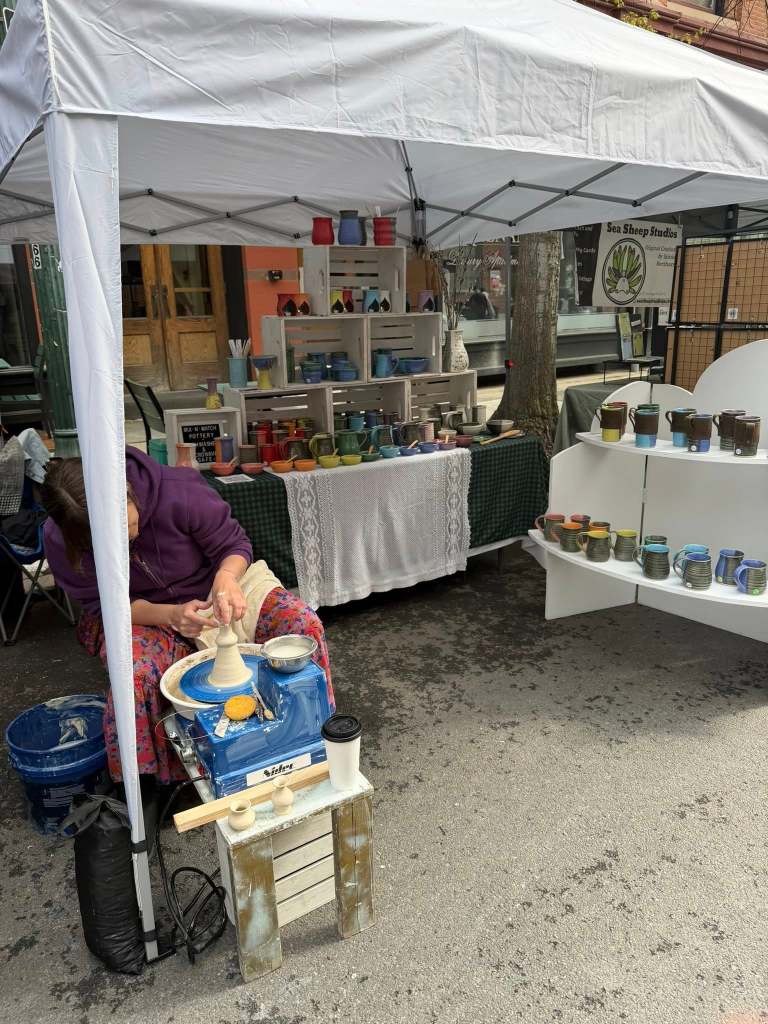
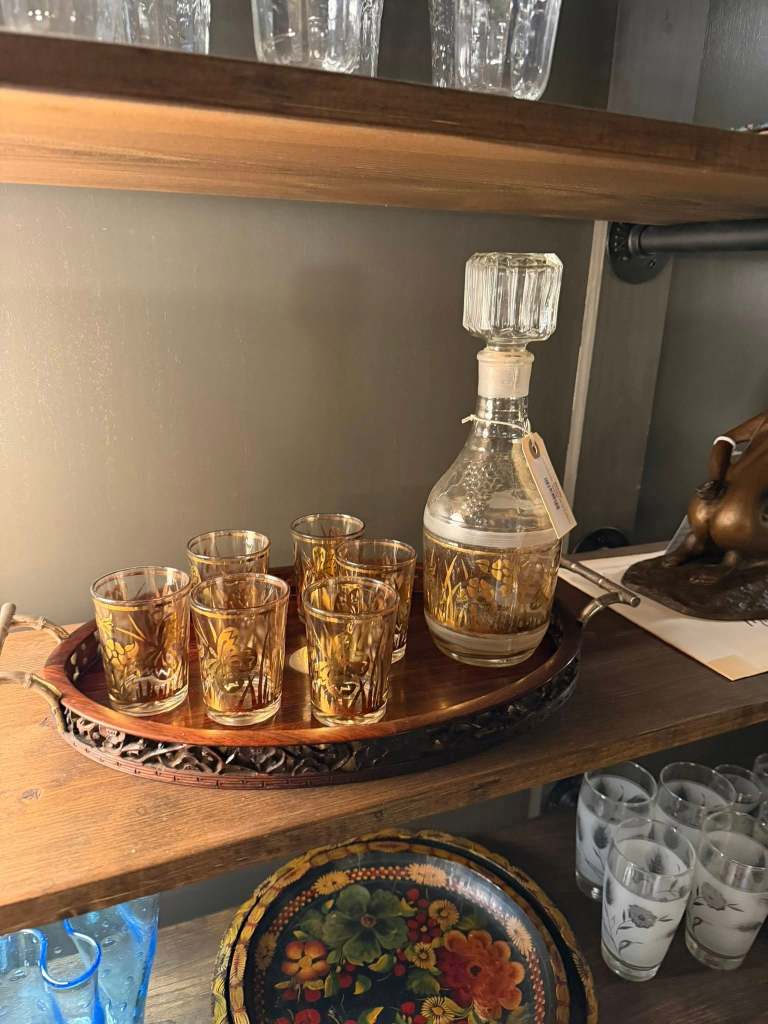
Someone shaping pottery right there at their booth, hands steady, turning clay into something useful in real time. Tables of handmade goods. Old glassware arranged carefully on wooden shelves inside a shop just off the street quiet, warm lighting, a contrast to the open air outside.

The market isn’t loud in the way you’d expect. It’s full, but not overwhelming. People sit at small tables in the street eating, talking, staying longer than they probably planned.

You don’t rush through it. This is the type of place where you want to take your time browsing and leaving no stone unturned. I was in heaven.

You wander, double back, pick something up, put it down, then go back for it anyway. By the time you leave, you’ve got a mix of things you meant to buy and things you didn’t but somehow all of it makes sense together.

That’s the thing about places like this.

You don’t just go for what you need. You go because it feels good to be there. I actually lost myself there for a bit which was exactly what I needed.

Being 55, Without Apology


There’s something quietly beautiful that happens in your fifties especially around 55 if you let it. A kind of clarity settles in. The noise fades. And for many of us, life finally begins to feel lighter.

You stop worrying so much about other people’s judgments. You don’t replay conversations the way you once did. Embarrassment loosens its grip. At some point, a simple truth clicks into place: most people aren’t paying attention to how you live and if they are, it’s often because they wish they had the courage to live more freely themselves.

Peace starts to feel like the ultimate luxury. Home becomes a sanctuary. Your bed, your routines, your dog, the quiet these things matter more than appearances ever did. You realize you don’t need more… you need less.

This is also the decade when many people finally learn to let go. You recognize when relationships carry ill intentions through words, actions, or patterns and you walk away without guilt. You stop taking things personally, because emotionally healthy people don’t invest their energy in trying to hurt others. And those who do? You wish them well. You pray for them. Then you choose distance.

So much comes into focus in your fifties. You step outside your comfort zone without fear. You simplify your space, your finances, your emotional world. You stop living above your means and start living within your values.

You no longer chase people to like you or love you. Real connection doesn’t need pursuit. And there’s a quiet confidence in knowing that the right partner the right people will fit your energy naturally, without force or performance.

Most of all, you learn how to speak honestly. Calmly. Directly. If something involves you, you address it with clarity, not defensiveness. Because by now, you understand that protecting your peace isn’t selfish it’s necessary.

Your fifties teach you this: letting go of nonsense isn’t loss it’s freedom.
It’s the season where you stop living for approval and start living with intention.
And for many of us, that realization feels like coming home to ourselves for the first time and living in the moment.

And the most surprising part of all? I don’t feel my age I feel younger than I ever did. It’s crazy! Not in a chasing youth kind of way, but in a grounded, settled way. I feel lighter and freer. There’s an ease now that didn’t exist before now, when everything felt rushed, heavy, or uncertain. This kind of feeling comes from self-acceptance, from knowing who you are and no longer apologizing for it. I never thought I would reach this point in my life, but I did and so could you at any age actually.

When Students Slip Through the Cracks


There are many teachings and expectations in education that I struggle to fully wrap my head around. Education is supposed to be a systematic, regulated structure formats, frameworks, and standards we are expected to follow. Yet the reality is, not everything fits neatly into those boxes, and not every student does either.

I am a special education teacher in an alternative education school. Our school serves students from ten surrounding districts within our county. We work with students in grades 7 through 12, and the classified disabilities we support include emotional disturbance, learning disabilities, other health impairments (OHI), Tourette’s syndrome, and others.

Our special education classrooms are structured as 8:1:1, while our general education classes can include up to twelve students. We serve students with high-incidence disabilities in one program and students with low-incidence or more severe disabilities in another, based on instructional and support needs. These decisions are not arbitrary they are intentional, because the needs are real and complex.

Every facet of education matters. Curriculum matters. Standards matter. Data matters. But what matters just as much are the students sitting in those classrooms students who come in carrying trauma, instability, frustration, and often a long history of feeling misunderstood or dismissed.

And this is the part that weighs heavy.

If we, as educators, do not do a thorough job if we allow these students to slip through the cracks of the education system the impact does not end at graduation or aging out. These are the same students who are eventually sent out into the real world without the tools, coping skills, or supports they needed all along. The struggle doesn’t disappear; it just shifts. And when it does, it affects all of society.

Education is not just about passing classes or checking off requirements. For many of these students, school is the last structured support system they will have. It is where they learn how to regulate emotions, resolve conflict, communicate, and survive in a world that often isn’t built for them.

Let Me Do My Job


I’m taking a huge risk and it’s sad. I am taking a risk for saying how I really feel.

Today’s society is nothing like the one in which I grew up in. I had morals. I had respect. I lived by rules. Because of this, I am and became the person who I am today.

Things are different today. We, the older generation have to be afraid of what we say and do. The older generation is a lost and forgotten generation. I am talking about the ones who were born in the 60’s and 70’s and younger. Some of us are afraid, like me, who is in fear of losing my job. The job that’s keeping me afloat in this messed up world that we live in today. But should I really be living in fear? What am I at risk of losing? What am I going to gain if I say and do what I feel is in my heart?

The loss of my voice is debilitating. I cannot do the job that my heart yearns for me to do. My job is to make others better. To make others worthy and stronger and self-sufficient. All that is being stripped away from me.

I am a teacher. Let me teach. Let me do the best job I can and have faith in me that I will give others a chance to be successful in life. But how am I supposed to do that if you take away everything I believe in that I need to pass on to generations to come?

It’s a sad society that we live in today. It’s sad that we have to be afraid to discipline, give guidance, and instill morals to those who need it the most.