Protect Your Peace


There’s something about a small town that makes you slow down a little.
This morning, I took a drive to the Village of Clinton. No real agenda. No rushing. Just breakfast, a little shopping, a visit with a friend, and some time to myself.
And honestly? I loved it.
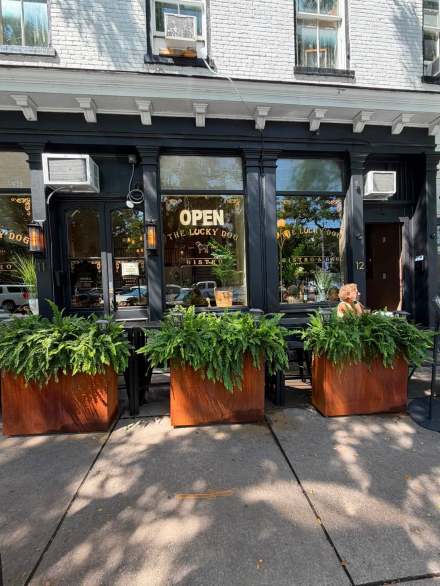
I started my morning at The Lucky Dog Bistro, a really pretty little spot with beautiful woodwork and a relaxed, laid-back atmosphere. It’s also pet-friendly, which I loved. The service was wonderful, and it was the kind of place where you don’t feel like you need to hurry through breakfast and get on with your day.
I ordered The Morning After, scrambled eggs, sausage, bacon, sourdough toast and home fries. Breakfast itself was simple, but sometimes the food isn’t the entire experience. I enjoyed sitting there, taking in the atmosphere and starting my morning somewhere different.
After breakfast, I wandered through some of the local shops.
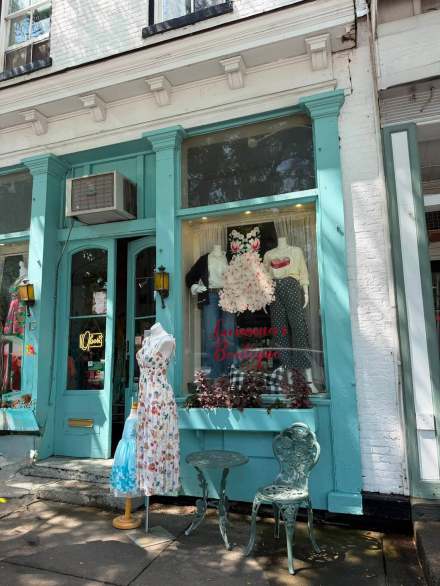
Of course, I managed to find my way into Lucianna’s Boutique, where I bought a few Christmas gifts.
Yes. Christmas gifts.
In August.
I know. 😂
But every year I tell myself I’m going to start earlier instead of waiting until the holidays are right on top of me, so maybe this year I’m actually going to listen to myself.
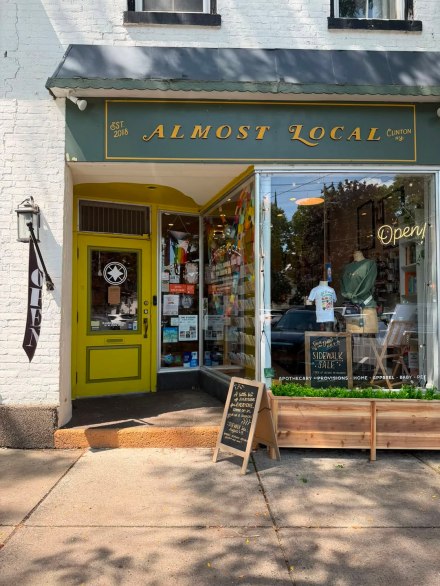
I also stopped at Almost Local, which was such a fun shop to browse. There were candles, pieces from local artists, little gifts and trinkets, and all sorts of things you don’t necessarily find in the big stores. Those are the shops I love because you never really know what you’re going to find when you walk through the door.
And that got me thinking about something.
We hear “shop local” all the time, but it’s easy to forget what that actually means.
When we spend money at a small local business, we’re supporting someone’s idea, someone’s livelihood and, ultimately, our own community. Even stopping in, looking around, telling someone about a place you discovered, or sharing their business on social media can make a difference.
So maybe this week is the perfect excuse to visit a local shop you’ve never been in before, grab breakfast or coffee somewhere different, or pick up a gift from a small business instead of automatically heading to a big-box store.
But there was another part of today that I enjoyed just as much.
I went by myself.
I’ve learned that I really enjoy doing things alone sometimes.
There is something freeing about getting in the car and going wherever you feel like going. You don’t have to ask anyone what they want to do next. You don’t have to worry about whether someone else is bored, ready to leave, or wants to go somewhere different.
You just…go.
You wander.
You stop when something catches your eye.
You sit a little longer if you feel like it.
Being alone and being lonely are two very different things.
Sometimes spending a few hours by yourself is exactly what you need to remember how much you actually enjoy your own company.
Today wasn’t anything extravagant. It was breakfast in a little village, a few local shops, a couple of Christmas presents ridiculously early, and a Saturday morning spent mostly on my own.
Simple.
And maybe that’s exactly why I enjoyed it so much.
Life, observed honestly.

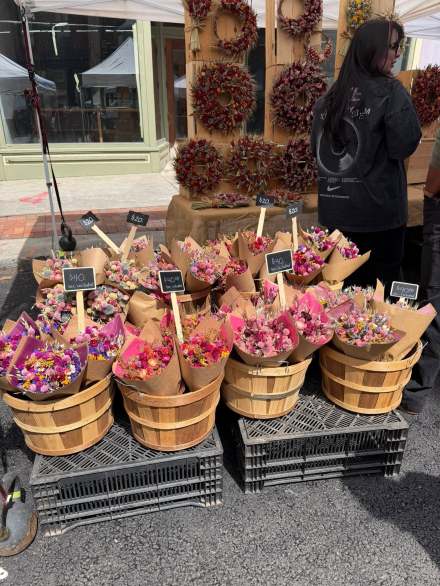
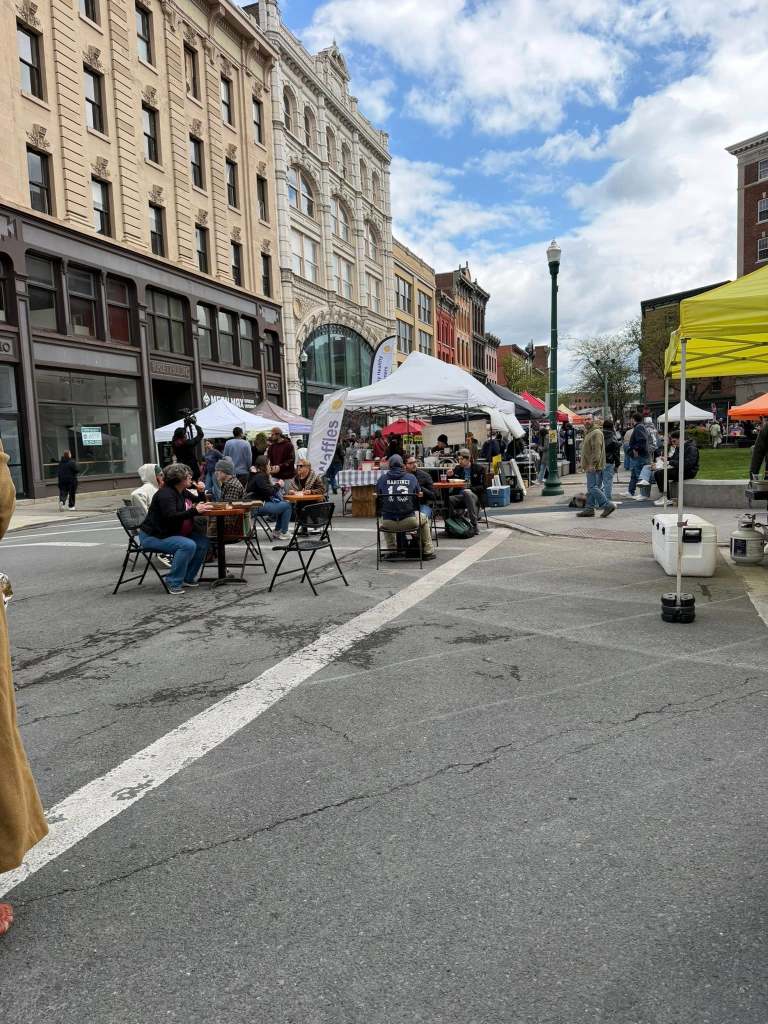
There’s a certain kind of morning you don’t plan too hard you just show up and let it unfold. That’s what the Troy Farmers Market feels like. My girlfriend and I went to the first opening day, which starts in May the first Saturday and then every Saturday there after. We arrived about 9:30. I suggest you get there early because it tends to get a little crowded mid afternoon and you want to get a jump on the good stuff in the morning.
Tents stretch down the street, white canopies lined up against old brick buildings, the kind that have seen a hundred versions of the same Saturday. People move slowly here. Not lazy just unhurried. Coffee in hand, dogs weaving between legs, conversations that don’t feel rushed.
The first thing that pulls you in is the color.
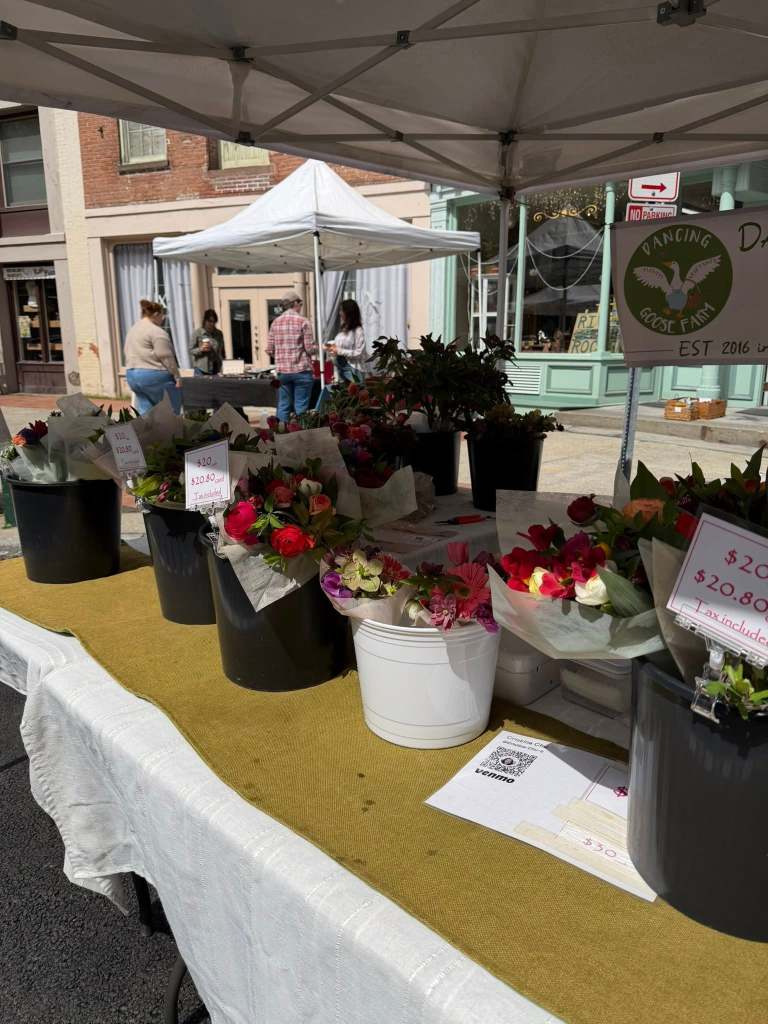
Bouquets stacked in wooden baskets, wrapped in brown paper like small gifts. Deep reds, dusty pinks, wild textures that don’t look overly arranged just gathered. Behind them, wreaths hang in rows, each one slightly different, like someone took the time to make sure no two were exactly alike.
You keep walking, and it shifts from flowers to food without warning.
There’s a table with cheese pull-apart bread from a vendor called Ideals. It’s the kind of thing you don’t overthink you just know it’s coming home with you. Warm, soft, the kind of bread that pulls apart in layers and disappears faster than you expect.
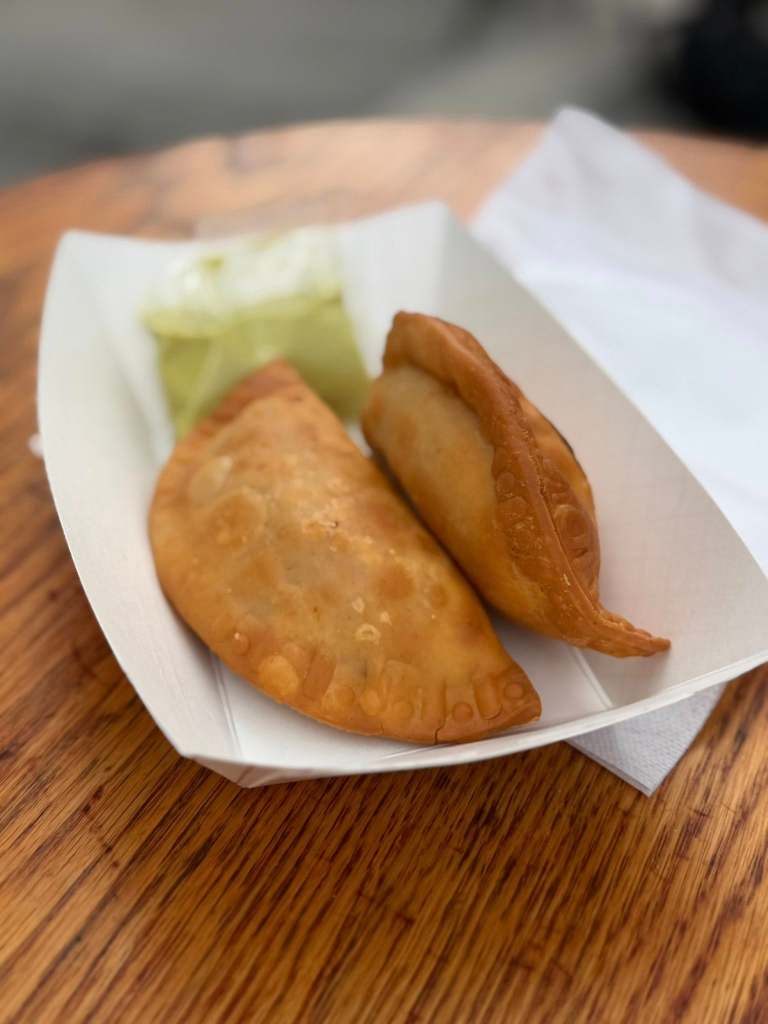
A few tents down, the smell changes again. Something savory, heavier. That’s where Lidia’s Empanadas is set up. You order without much hesitation. They hand it to you hot, and you realize pretty quickly this isn’t a “save it for later” situation. You eat it standing there, half paying attention to the crowd moving around you.
Then there’s the quieter side of the market.
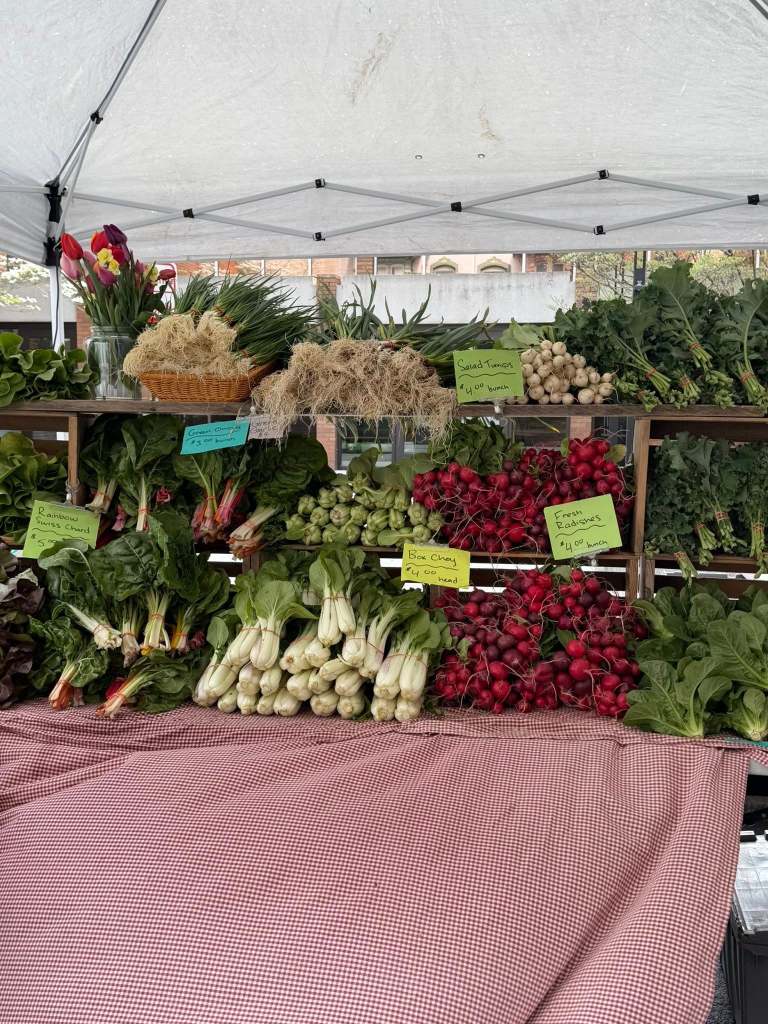
A produce stand stacked with greens bok choy, radishes, bunches of herbs still smelling like the ground they came from. I made roasted garlic and radishes as a side dish and it was delectably wonderful! You pick up basil and cilantro, not because you had a plan for them, but because they looked too fresh to pass up. That’s how a lot of decisions get made here.
Not everything is food.
There’s a small thrift setup tucked between vendors racks of vintage clothes, simple and a little unexpected in the middle of everything else. You flip through without urgency. It’s less about finding something and more about the act of looking.
And then there are moments you almost miss if you’re not paying attention.
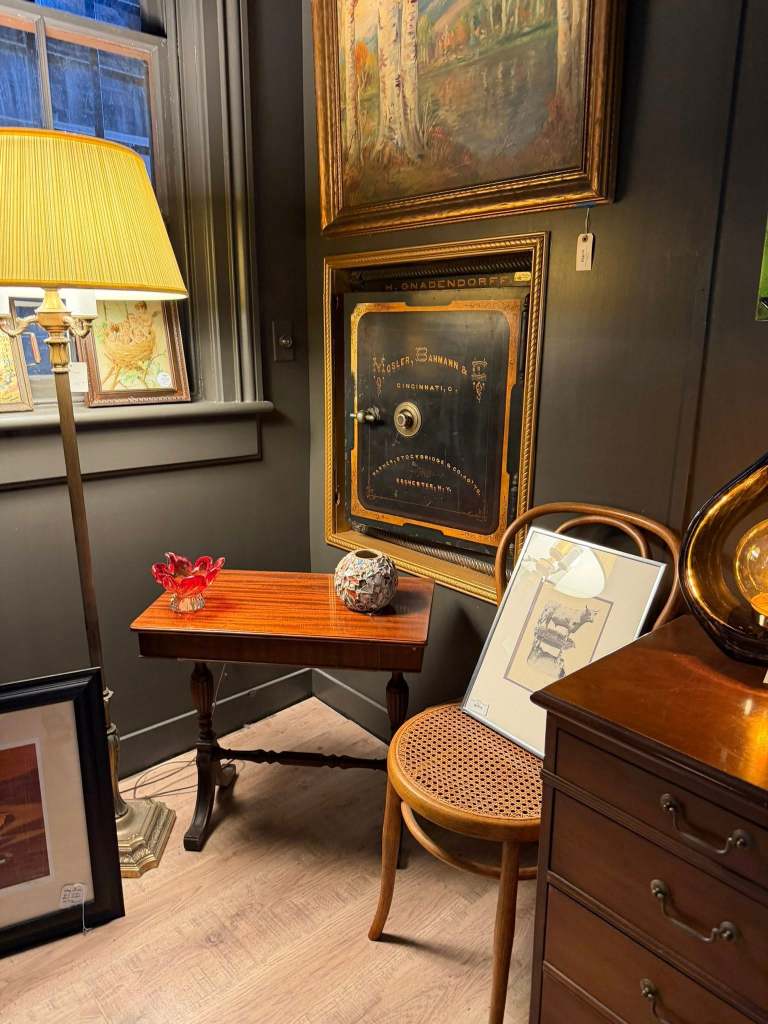
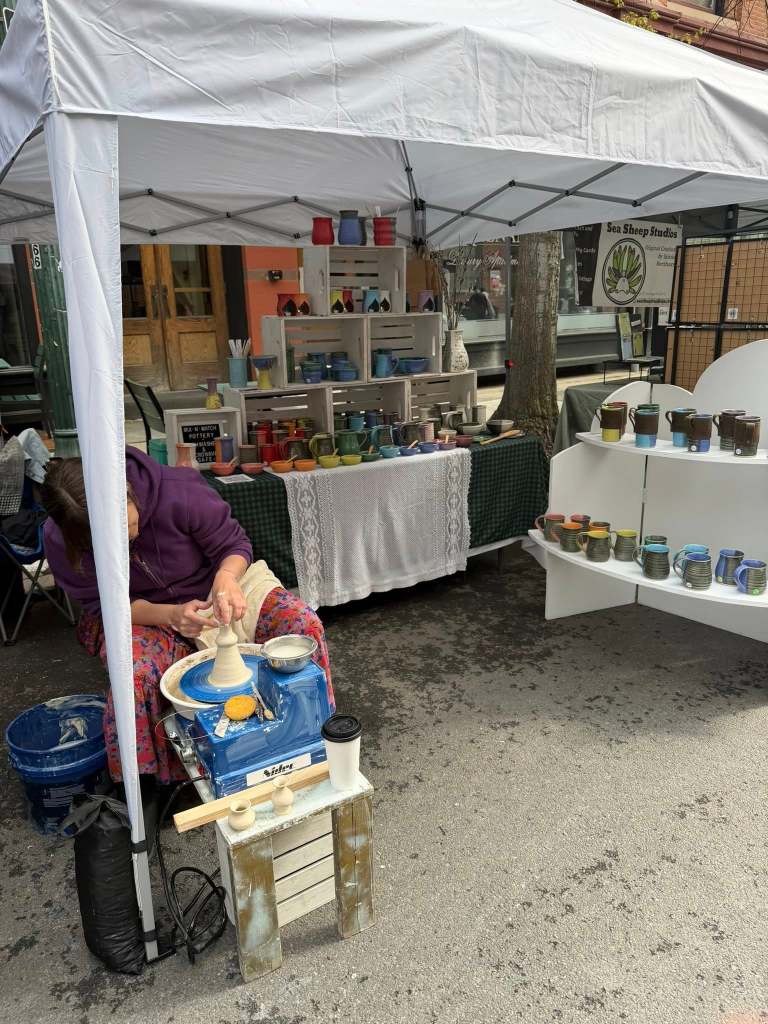
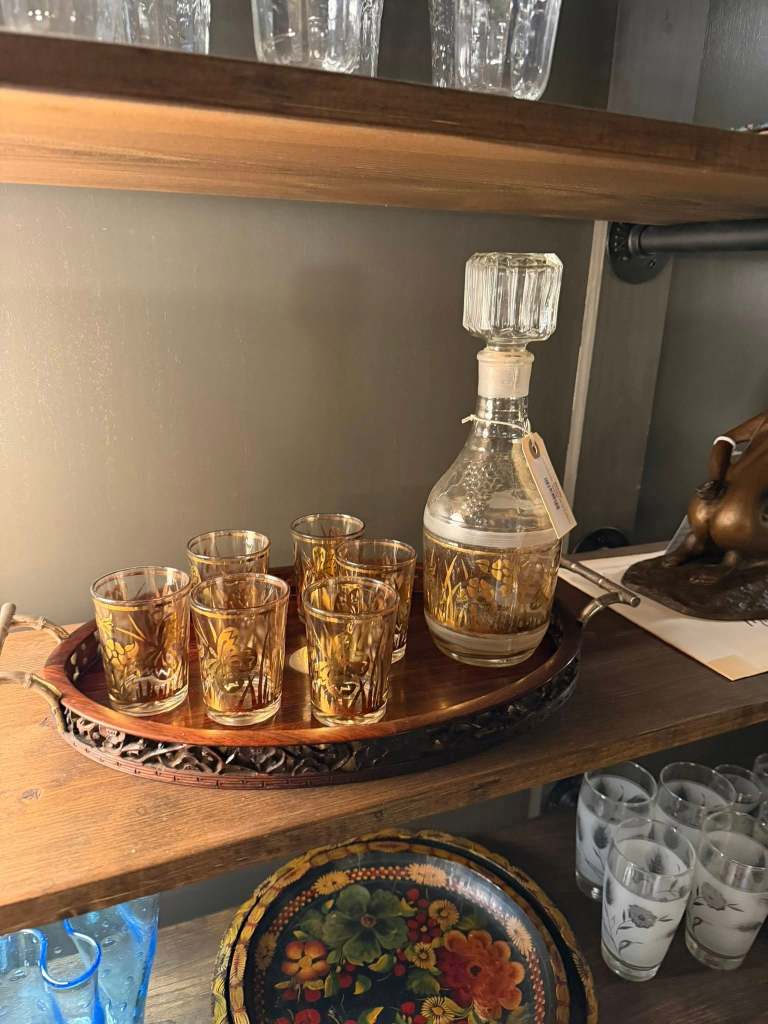
Someone shaping pottery right there at their booth, hands steady, turning clay into something useful in real time. Tables of handmade goods. Old glassware arranged carefully on wooden shelves inside a shop just off the street quiet, warm lighting, a contrast to the open air outside.
The market isn’t loud in the way you’d expect. It’s full, but not overwhelming. People sit at small tables in the street eating, talking, staying longer than they probably planned.
You don’t rush through it. This is the type of place where you want to take your time browsing and leaving no stone unturned. I was in heaven.
You wander, double back, pick something up, put it down, then go back for it anyway. By the time you leave, you’ve got a mix of things you meant to buy and things you didn’t but somehow all of it makes sense together.
That’s the thing about places like this.
You don’t just go for what you need. You go because it feels good to be there. I actually lost myself there for a bit which was exactly what I needed.

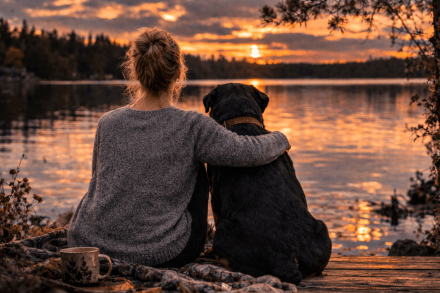
Some of the strongest people you know aren’t strong because life was easy. They’re strong because, at some point, they learned they had to be.
Hyper-independence is often mistaken for strength. On the surface it looks attractive and desirable to someone who handles everything themselves, asks for nothing, and keeps moving forward no matter what. But hyper-independence isn’t just independence. It’s a learned way of surviving in a world where, at some point, relying on other people didn’t feel safe.
For many of us, it starts early. A difficult childhood teaches us how much space we’re allowed to take up in the world and whether someone will show up when we need them. I was a latchkey kid, the youngest of four girls. By the time I came along, my parents were, in many ways, already spent. The house wasn’t always peaceful, there was a lot of yelling/screaming, and my father’s extra-curricular activities left cracks in the foundation of our family that a kid can feel even if she doesn’t fully understand them yet. So I did what a lot of kids do in those environments: I learned to take care of myself. I played alone. I figured things out on my own. And like many children growing up in complicated homes, I learned some lessons about trust and safety far earlier than I should have. Maybe that is why people mistake my mistrust for hyper-independence/”being strong.”
When independence becomes the only way you know how to live, it follows you into adulthood. You become capable, resilient, and outwardly strong but relationships can feel complicated. Sometimes we choose solitude not because we truly want to be alone, but because being close to someone requires a level of vulnerability we never learned how to trust. Sometimes we sabotage good things without meaning to, pulling away just when connection begins to feel real. It isn’t because we’re broken. It’s because the part of us that learned to survive alone still thinks it’s protecting us. Is this something that we will ever be able to get over? Will we ever allow ourselves to welcome a new healthy relationship into our lives?
If you recognize yourself in this, I want you to know something: you are not strange, and you are not alone. Many of us learned early that the safest place to stand was on our own two feet. That instinct kept us going when we needed it most. But it doesn’t mean we were meant to walk through life alone forever. Understanding where hyper-independence comes from is the first step toward loosening its grip toward letting people in, little by little, without feeling like we’re giving up our strength.
And if you’re someone who has built a life around doing everything yourself, who sometimes pushes people away even when your heart wants connection, I see you. Truly. There are more of us out here than you realize.


